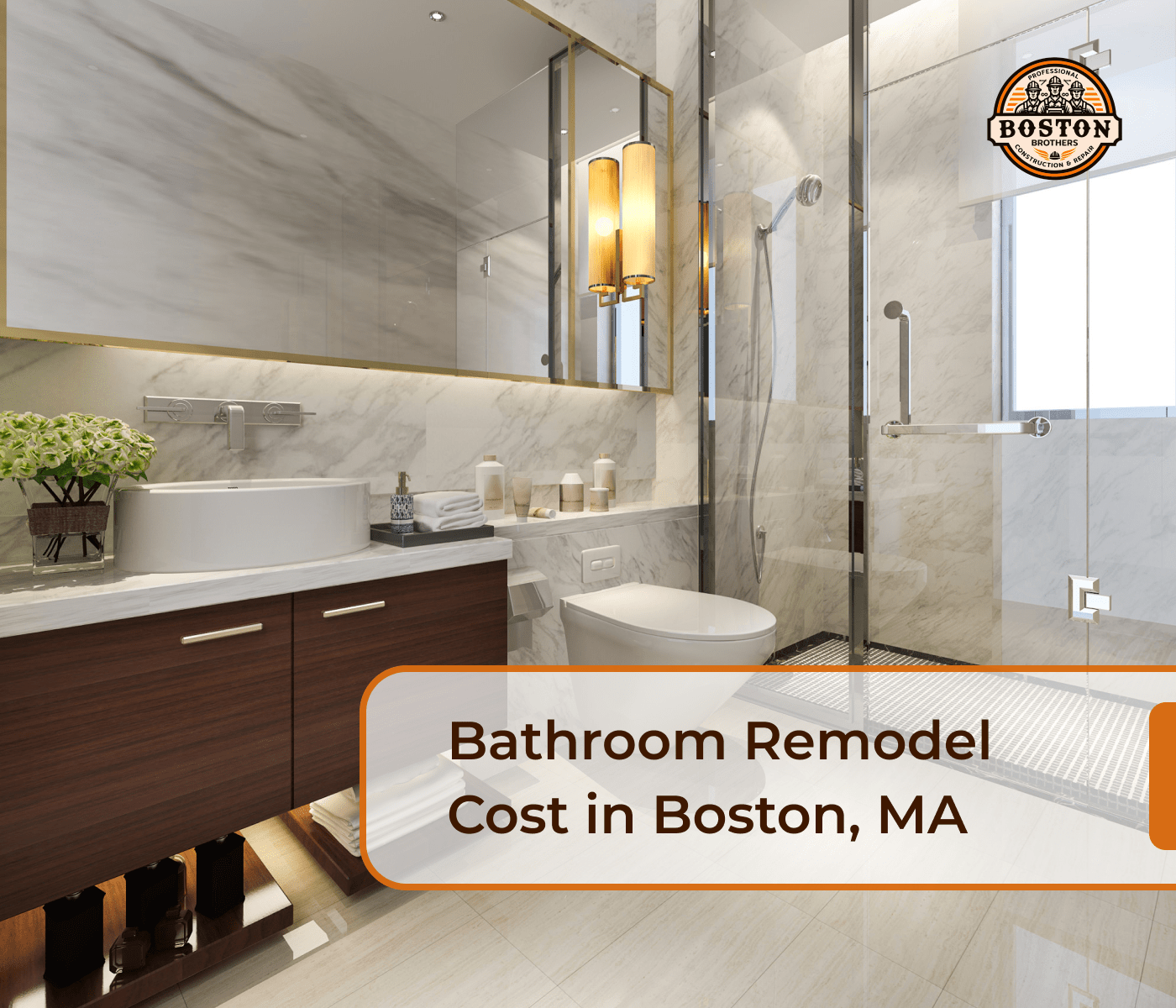
Bathroom Remodel Cost in Boston, MA: 2026 Guide
Bathroom remodeling in Boston can cost anywhere from several thousand dollars for limited updates to $100,000 or more for extensive, high-end renovations. The final price depends on the size of the bathroom, the condition of the existing space, the materials you select, and the amount of plumbing, electrical, waterproofing, and construction work required.
A simple bathroom refresh that keeps the existing layout is very different from a complete renovation with a custom walk-in shower, new tile, upgraded plumbing, and structural changes.
For homeowners in Boston, Wellesley, Newton, Needham, and surrounding Massachusetts communities, existing home conditions and local construction requirements can also influence the budget.
This guide explains bathroom remodeling costs in Greater Boston, the factors that affect pricing, how different renovation choices influence expenses, and how to plan a realistic budget before contacting a contractor.
How Much Does a Bathroom Remodel Cost in Boston?
The cost of a bathroom remodel depends primarily on how much work is involved.
Rather than focusing on a single average, homeowners should compare budgets based on renovation scope.
Bathroom Remodeling Cost by Project Type
Project type | Broad planning range | Typical improvements |
|---|---|---|
Cosmetic bathroom refresh | $5,000 to $20,000+ | Painting, selected fixtures, vanity updates, mirrors, lighting, and minor surface improvements |
Standard bathroom remodel | $15,000 to $50,000+ | New vanity, shower or bathtub, tile, flooring, lighting, and plumbing improvements |
Major or custom bathroom renovation | $40,000 to $100,000+ | Custom showers, premium finishes, layout changes, extensive tile work, and more complex construction |
These are broad budgeting examples, not fixed contractor prices or a statistical average. The categories intentionally overlap because two bathrooms with similar dimensions can require very different amounts of work.
A small bathroom with hidden water damage or complicated plumbing may cost more than a larger bathroom undergoing a straightforward renovation.
Likewise, an extensive primary bathroom remodel with custom cabinetry, natural stone, and a redesigned layout can exceed the upper ranges shown above.
What Do Published Boston Remodeling Costs Show?
Several industry sources provide useful context.
According to Angi's 2026 Boston bathroom remodeling cost guide, the reported average bathroom remodel cost is approximately $12,625, with substantial variation among project types.
The 2025 Cost vs. Value Report for Boston provides different benchmarks for standardized remodeling projects:
Remodeling project | Published Boston project cost |
|---|---|
Midrange bathroom remodel | $27,681 |
Universal design bathroom remodel | $43,256 |
Upscale bathroom remodel | $84,165 |
These figures are historical benchmarks based on defined project specifications. They are not quotes from Boston Brothers or guaranteed current prices.
The difference between the sources reflects their methodologies and the types of remodeling projects included.
The key takeaway: The price of a bathroom remodel becomes much more meaningful once you define what will be replaced, what will remain, and whether the existing layout needs to change.
What Factors Affect Bathroom Remodeling Costs in Boston?
Bathroom renovation costs are influenced by several interconnected decisions.
The most important factors include bathroom size, remodeling scope, material selections, existing conditions, labor, and changes to plumbing or electrical systems.
1. Bathroom Size and Layout
Bathroom size influences the amount of flooring, tile, cabinetry, and other materials required.
However, square footage alone does not determine the price.
A compact bathroom with a complicated layout may require extensive plumbing modifications or custom-sized materials.
A larger bathroom that retains its current fixture locations may involve less complicated construction.
Common bathroom configurations include:
Powder Rooms
These generally contain a toilet and sink without a bathtub or shower.
Projects may focus on replacing the vanity, fixtures, flooring, lighting, and finishes.
Full Bathrooms
A typical full bathroom includes a toilet, sink, and bathtub or shower.
Renovating these rooms often involves tile, waterproofing, plumbing fixtures, and ventilation.
Primary Bathrooms
Larger primary bathrooms may include double vanities, separate showers, bathtubs, additional cabinetry, or more extensive lighting.
Custom materials and expanded layouts can significantly increase the remodeling budget.
Before estimating costs, consider both the size of the room and the construction work necessary to achieve the desired result.
2. Scope of the Renovation
The scope of work is often more important than the room's dimensions.
A cosmetic update might include replacing a vanity and mirror, installing new lighting, and repainting the walls.
A full bathroom remodel may involve removing the existing shower, bathtub, flooring, tile, and fixtures before installing new components.
More extensive renovations may require:
Changing the bathroom layout
Relocating plumbing fixtures
Modifying electrical wiring
Replacing damaged subflooring
Rebuilding shower walls
Improving ventilation
Altering walls or structural elements
Installing custom cabinetry or finishes
The more construction work required, the more labor, materials, planning, and coordination the project may involve.
3. Labor and Installation
Bathroom remodeling often requires several types of skilled labor.
Depending on the scope, a project may involve:
Demolition and site preparation
Carpentry and framing
Plumbing
Electrical installation
Waterproofing
Tile installation
Shower and bathtub installation
Vanity installation
Drywall and painting
Finish carpentry
Labor is a significant component of remodeling costs in Greater Boston.
The amount depends on the complexity of the work, the number of trades required, the accessibility of the bathroom, and the existing conditions.
For example, installing a standard vanity in an existing location is generally less involved than building a custom vanity around relocated plumbing connections.
4. Materials and Finishes
Material choices can create substantial differences between two bathroom renovation budgets.
Common selections include:
Ceramic or porcelain tile
Natural stone tile
Quartz or stone countertops
Prefabricated or custom vanities
Bathtubs and shower systems
Glass shower enclosures
Faucets and fixtures
Lighting and mirrors
Heated flooring systems
A bathroom does not need the most expensive materials to feel well designed.
The best choices balance appearance, suitability for wet environments, maintenance needs, and the homeowner's budget.
Bathroom Remodeling Cost Breakdown by Component
Understanding individual remodeling components can help homeowners identify where to prioritize spending.
The following sections explain which decisions typically influence costs.
Shower Remodeling and Walk-In Showers
A shower can be one of the most technically demanding parts of a bathroom renovation.
Its cost depends on the shower dimensions, wall construction, waterproofing system, tile, plumbing fixtures, and enclosure.
Common options include:
Prefabricated Shower Systems
Prefabricated shower components may reduce certain material and installation requirements when compared with fully customized tiled showers.
The existing bathroom must still be evaluated for proper fit, plumbing compatibility, and installation conditions.
Custom Tile Showers
Custom showers allow greater flexibility in tile patterns, dimensions, niches, fixtures, and glass enclosures.
However, they may require more surface preparation, waterproofing, tile installation, and finishing work.
Walk-In Showers
Walk-in shower renovations can improve accessibility and create a more open appearance.
Costs depend on the shower configuration, threshold design, drainage, waterproofing, and whether the existing bathtub or shower location can be reused.
For a general point of reference, Angi's 2026 Boston shower remodeling guide reports substantial variation between standard shower replacements and custom installations.
The price of a shower-only renovation should not be confused with the cost of remodeling the entire bathroom.
Bathtub Replacement and Tub-to-Shower Conversions
Replacing an existing bathtub with a similar unit may be relatively straightforward if the existing plumbing and surrounding surfaces can be retained.
A tub-to-shower conversion can involve more work.
Factors include:
Removal of the existing bathtub
Drain location and compatibility
Shower base installation
Wall preparation
Waterproofing
New plumbing fixtures
Tile or wall surrounds
Shower glass or enclosure installation
Moving the drain or making significant changes to the floor structure may increase the project's complexity.
Before converting a bathtub to a shower, consider how the bathroom will be used and whether retaining a tub is important to your household.
Bathroom Vanities and Countertops
Bathroom vanity costs vary depending on construction, materials, dimensions, and installation requirements.
A standard vanity with an integrated countertop is different from a custom-built double vanity with specialized storage.
Consider:
Vanity width and configuration
Cabinet material and finish
Countertop material
Number of sinks
Plumbing connections
Drawer and storage features
Wall-mounted or floor-mounted installation
Keeping the sink in its existing location may help limit plumbing modifications.
For smaller bathrooms, a carefully selected vanity can improve storage and usable floor space without requiring major layout changes.
Tile Installation and Flooring
Tile selection affects both material and labor costs.
The final expense depends on:
Total floor and wall area
Tile size and material
Installation pattern
Surface preparation
Cutting and edge details
Existing substrate condition
Waterproofing requirements
Large-format tiles may require careful substrate preparation, while intricate mosaic patterns can involve additional installation labor.
Natural stone may also require different maintenance and installation considerations from porcelain or ceramic tile.
A good remodeling estimate should distinguish tile materials from installation, preparation, and waterproofing work.
Bathroom Plumbing and Electrical Upgrades
Plumbing and electrical work can materially affect a renovation budget.
Common projects include:
Replacing faucets and shower fixtures
Updating supply or drain lines
Moving sinks or toilets
Installing new lighting
Adding or relocating outlets
Improving ventilation
Installing electrical floor-heating systems
Keeping the existing plumbing configuration may simplify some projects.
However, older or damaged systems may require updates even when fixtures remain in their original locations.
Applicable work must comply with Massachusetts requirements and be performed by appropriately qualified professionals.
Bathroom Waterproofing and Ventilation
Waterproofing and ventilation are essential considerations in bathroom construction.
Poor moisture management can contribute to damage behind walls, under flooring, and around showers.
A renovation may require:
Proper shower waterproofing
Compatible drain and shower-base details
Preparation of wet-area substrates
Appropriate sealing around penetrations
Bathroom exhaust ventilation
Repairs to existing moisture damage
These elements should be included in the project scope where needed.
Choosing durable surface finishes is important, but attractive tile alone does not replace a properly designed waterproofing system.
How Much Does It Cost to Remodel a Small Bathroom in Boston?
A small bathroom remodel can cost anywhere from several thousand dollars for limited cosmetic improvements to tens of thousands of dollars for a complete renovation.
The final price depends more on the work involved than on the room's size alone.
For example, a small bathroom may still require:
Demolition
Plumbing modifications
Shower waterproofing
Tile installation
Electrical work
Ventilation improvements
Vanity and fixture installation
Limited space can also make construction access and material handling more difficult.
How to Keep a Small Bathroom Remodel Within Budget
Consider preserving the existing fixture layout, selecting practical storage, and choosing materials suited to the space.
For example, a compact vanity with useful drawers may improve functionality without requiring additional floor area.
The goal should be to make better use of the bathroom, not necessarily to fit as many features into it as possible.
Why Can Bathroom Remodeling Be More Expensive in Older Boston Homes?
Greater Boston includes historic townhouses, older Colonials, multifamily properties, and homes that have undergone multiple renovations.
Existing conditions can influence the scope and cost of bathroom remodeling.
Aging Plumbing Systems
Older properties may have supply or drainage components that need evaluation or replacement during renovation.
Relocating fixtures can introduce additional work if existing systems are difficult to access.
Uneven Floors and Walls
Older construction may require surface preparation before tile, cabinetry, and other finishes can be installed correctly.
Uneven substrates can increase installation labor and preparation needs.
Hidden Moisture Damage
Demolition may reveal moisture damage around an old shower, bathtub, toilet, or plumbing connection.
Damaged subflooring or wall materials may need repair before new finishes are installed.
Lead Paint Considerations
Homes built before 1978 may contain lead-based paint.
Massachusetts requires properly licensed lead-safe renovation contractors for qualifying paid work that disturbs painted surfaces above applicable thresholds in pre-1978 housing.
Homeowners should review the state's Lead-Safe Renovation for Homeowners guidance before beginning applicable work.
Construction Access
In some Boston properties, bathroom renovations may involve limited parking, narrow stairways, condominium restrictions, or difficult material-delivery access.
These conditions do not apply to every project, but they can affect construction logistics and labor.
The key lesson: An older home does not automatically mean an expensive renovation. Its actual conditions and the proposed work determine the level of complexity.
Bathroom Remodeling in Wellesley, Newton, and Needham
Bathroom renovation considerations vary from property to property across Greater Boston.
Homeowners in Wellesley, Newton, Needham, and surrounding communities may be updating older bathrooms, improving layouts, or incorporating bathroom work into a larger home renovation.
Bathroom Remodeling in Wellesley, MA
For homeowners in Wellesley, remodeling priorities may include replacing an outdated bathtub, improving storage, installing a new shower, or coordinating bathroom finishes with the surrounding home's architecture.
Existing plumbing and construction conditions should be reviewed before establishing a budget.
Bathroom Remodeling in Newton, MA
Newton includes a wide variety of residential buildings, from older homes to newer construction.
Bathroom renovations may involve updating fixtures, improving ventilation, or modifying existing layouts.
Projects in older buildings can require additional evaluation of existing systems and construction conditions.
Bathroom Remodeling in Needham, MA
Needham homeowners may be considering practical bathroom upgrades, including improved storage, tile replacement, walk-in showers, or complete renovations.
The scope may be relatively straightforward or part of a larger residential remodeling project.
Do Bathroom Remodeling Costs Differ Between These Towns?
They can, but the municipality alone does not determine the price.
The property, bathroom size, selected materials, labor requirements, and construction complexity are generally more useful factors for estimating costs.
Permitting is handled by the applicable local municipality, so homeowners should confirm requirements for their specific property.
Boston Brothers provides bathroom remodeling services throughout Greater Boston, including Wellesley, Newton, Needham, Natick, and surrounding Massachusetts communities.
Do You Need a Permit for Bathroom Remodeling in Boston?
Many bathroom remodeling projects in Boston require permits, particularly when the renovation includes plumbing, electrical work, structural changes, or ventilation modifications.
The specific requirements depend on the work involved.
According to the City of Boston's Bathroom and Kitchen Renovation Guide, bathroom renovations may involve different building-permit processes.
Short-Form Building Permits
A short-form permit may apply to renovation work within an existing bathroom when structural changes are not involved.
The exact scope and eligibility should be confirmed before applying.
Long-Form Building Permits
More extensive construction or structural modifications may require a long-form building permit and additional documentation.
Plumbing Permits
Changes involving plumbing systems, water supply, drainage, or fixture connections may require plumbing permits.
Electrical and Other Trade Permits
Projects involving electrical installations, ventilation, or other regulated work may require separate trade permits.
The City of Boston requires appropriately licensed professionals to apply for and perform regulated trade work.
What About Other Massachusetts Towns?
Boston's requirements should not automatically be applied to Wellesley, Newton, Needham, or other communities.
Each municipality administers its own permit and inspection process under applicable state and local requirements.
Before construction begins, confirm:
Which permits are required.
Who is responsible for obtaining them.
Whether inspections are necessary.
Which licensed professionals must perform regulated work.
These questions should be addressed in the contractor's written proposal.
How Long Does a Bathroom Remodel Take?
Bathroom remodeling timelines vary with the size and complexity of the project.
A limited refresh may require relatively little construction, while a complete renovation involving demolition, plumbing, waterproofing, tile installation, and multiple inspections can take several weeks or longer.
Factors affecting the schedule include:
Material availability
Project complexity
Existing bathroom conditions
Plumbing and electrical requirements
Waterproofing and material curing times
Permit approvals and inspections
Custom components
Changes requested during construction
Can You Stay in Your Home During Renovation?
Many homeowners remain in their homes during bathroom remodeling.
However, the bathroom being renovated may be unusable for part of the project.
If your home has only one bathroom, discuss temporary arrangements before construction starts.
Homeowners should also prepare for noise, dust, restricted access, and possible utility interruptions.
Ask your contractor for a realistic construction schedule rather than relying on a universal timeline.
How to Reduce Bathroom Remodeling Costs Without Cutting Corners
Reducing a bathroom renovation budget is often about choosing the right scope rather than simply purchasing less expensive materials.
1. Keep Plumbing Fixtures in Their Existing Locations
Keeping the toilet, sink, and shower in their current positions may reduce plumbing modifications.
A new layout may still be worthwhile, but it should address a genuine functional problem.
2. Prioritize Necessary Improvements
Identify which changes matter most.
For some homeowners, replacing a worn shower is more important than installing a premium vanity.
For others, storage and lighting may be the highest priorities.
3. Use Standard Fixtures Where Practical
Standard-size vanities, shower components, and other commonly available products may simplify installation and reduce the need for custom fabrication.
However, product compatibility and existing dimensions must be checked.
4. Select Durable Materials
Consider suitability for bathroom conditions, maintenance, cleaning, and long-term use.
The cheapest material is not necessarily the best value if it performs poorly in a wet environment.
5. Finalize Materials Before Construction
Selecting tile, fixtures, vanity dimensions, and finishes early can help avoid changes after installation work has started.
Late changes may affect material orders, labor, and the construction schedule.
6. Compare Detailed Contractor Proposals
An estimate should clearly identify what is included.
One proposal may cover demolition, disposal, waterproofing, tile, fixtures, and painting.
Another may exclude some of those items.
Compare the same work scope before deciding which quote provides better value.
7. Reserve Money for Unexpected Conditions
A contingency reserve helps homeowners prepare for unforeseen construction work, especially when renovating older properties.
Depending on the complexity of the project, consider setting aside approximately 10% to 20% of the anticipated construction budget.
This is a general planning approach, not an automatic contractor fee.
Is a Bathroom Remodel Worth the Investment?
Bathroom remodeling can improve comfort, functionality, maintenance, and the overall appeal of a home.
However, the financial return depends on the renovation scope, local market, material selections, and property conditions.
The 2025 Cost vs. Value Report estimates that a standardized midrange bathroom remodel in Boston recouped approximately 65% of its modeled project cost at resale.
The modeled return for an upscale bathroom remodel was lower.
These figures are market-based estimates, not guarantees for an individual home.
For homeowners planning to stay in their property, the everyday benefits of a better bathroom may be just as important as resale considerations.
When Might Remodeling Make Sense?
Consider remodeling if:
The bathroom no longer functions well.
Fixtures or finishes are deteriorating.
Storage is inadequate.
The layout is inconvenient.
Moisture-related problems need attention.
The space no longer meets household needs.
The value of the renovation should be evaluated in relation to your goals, expected time in the home, and overall budget.
How to Plan a Bathroom Remodeling Budget
A realistic remodeling budget starts with a clear understanding of the existing space and the improvements you want to make.
Step 1: Identify Your Priorities
Decide whether your project is mainly about improving appearance, functionality, storage, comfort, or correcting existing problems.
Separate necessary improvements from optional features.
Step 2: Document the Existing Bathroom
Photographs, approximate dimensions, and information about existing plumbing and fixtures can help explain the project.
If you know about any moisture damage, electrical issues, or previous renovations, mention those conditions during the consultation.
Step 3: Define the Renovation Scope
Determine whether you're considering:
A cosmetic refresh
Shower or bathtub replacement
Vanity and fixture upgrades
A complete same-layout remodel
A bathroom redesign involving layout changes
Step 4: Establish a Budget Range
Consider how much you're comfortable spending and whether additional contingency funds are available for unforeseen work.
Avoid committing the entire budget to finish materials before accounting for labor and technical requirements.
Step 5: Review a Detailed Estimate
A bathroom remodeling estimate should explain the proposed work and clarify important allowances.
Estimate component | What to confirm |
|---|---|
Demolition | What existing materials will be removed? |
Plumbing | Which fixtures or connections will be replaced or relocated? |
Electrical | What lighting, outlets, and ventilation work is included? |
Waterproofing | What wet-area preparation and protection is included? |
Tile and flooring | Which materials and installation work are covered? |
Shower or bathtub | Are all necessary components and installation included? |
Vanity and fixtures | Who supplies the products, and what is included? |
Painting and finishing | Are repairs, trim, and final finishes included? |
Permits | Who obtains them, and are fees included? |
Changes | How will unforeseen work or requested modifications be priced? |
Step 6: Verify the Contractor
Massachusetts has specific Home Improvement Contractor registration and contract requirements.
The state generally requires written contracts for covered home improvement projects costing more than $1,000.
Homeowners should verify applicable registration and licensing, review the written scope, and understand the payment schedule and permit responsibilities.
For official information, see the Massachusetts Home Improvement Contractor Homeowner Resources.
Explore Boston Brothers Bathroom Remodeling Projects
Reviewing completed work can help homeowners understand different bathroom layouts, finishes, and renovation possibilities.
Boston Brothers' Elegant Bath Transformations portfolio features bathroom designs with:
Glass-enclosed walk-in showers
Coordinated tile and stone finishes
Contemporary vanities
Updated lighting and fixtures
Practical storage
Modern and traditional design elements
These project examples demonstrate design possibilities but should not be treated as pricing examples without verified project costs.
For more design inspiration, read Bathroom Remodeling Tips for a Modern Look.
Frequently Asked Questions About Bathroom Remodeling Costs in Boston
What is the average cost of bathroom remodeling in Boston, MA?
Published estimates vary considerably depending on the projects included. Angi's 2026 Boston guide reports an average of approximately $12,625, while the 2025 Cost vs. Value report estimates around $27,700 for a standardized midrange remodel and $84,200 for an upscale project. Your actual cost depends on the bathroom, materials, and work required.
Is $10,000 enough to remodel a bathroom in Boston?
A $10,000 budget may cover selected updates to a smaller bathroom, especially if the existing layout, plumbing, and major surfaces remain in good condition. It may not be sufficient for a complete renovation involving extensive demolition, new tile, plumbing changes, and custom installations.
Can I remodel a bathroom for $20,000?
A $20,000 budget may support a meaningful bathroom renovation depending on the existing conditions, room size, and selected materials. Keeping the current layout and choosing standard components can help control costs. Extensive custom tile work, structural changes, or concealed damage may require a larger budget.
What is the most expensive part of a bathroom remodel?
The shower, plumbing changes, tile installation, and associated labor can be among the most expensive parts of a bathroom renovation. Custom cabinetry, structural work, and premium finishes may also represent significant costs. The largest expense depends on the project's scope.
Does replacing a bathtub with a walk-in shower cost more?
A tub-to-shower conversion may cost more than a straightforward bathtub replacement because it can involve additional waterproofing, drainage modifications, tile, and enclosure installation. The final cost depends on the existing plumbing, shower configuration, and materials selected.
Is it cheaper to remodel a small bathroom?
A smaller bathroom generally requires fewer surface materials, but it is not automatically inexpensive to renovate. Plumbing, demolition, waterproofing, electrical work, and installation still require skilled labor. Existing conditions and complexity can have a greater impact on the budget than square footage alone.
Do bathroom renovations require permits in Boston?
Many bathroom renovations in Boston require permits, particularly when plumbing, electrical, ventilation, or structural work is involved. The City of Boston provides short-form and long-form building-permit processes depending on the work, along with requirements for applicable trade permits.
How much should I budget for unexpected bathroom remodeling expenses?
For general planning, consider keeping approximately 10% to 20% of the expected construction budget available for unforeseen work. The appropriate amount depends on the project's complexity and uncertainty, especially when older plumbing, hidden moisture damage, or extensive demolition may be involved.
How long does a full bathroom renovation take?
A complete bathroom renovation can take several weeks or longer depending on the work involved, materials, inspections, and existing conditions. Custom showers, complex tile installations, plumbing relocation, and structural changes may extend the schedule. Ask the contractor for a timeline based on your specific project.
Does moving the toilet or shower increase remodeling costs?
It often does. Relocating a toilet, sink, or shower may require changes to plumbing supply lines, drains, ventilation, flooring, and surrounding construction. Retaining the existing layout can reduce the amount of work required, although it may not be the best solution for every bathroom.
Is bathroom remodeling more expensive in Newton or Wellesley than Boston?
Bathroom remodeling prices can vary among Boston, Newton, Wellesley, and surrounding communities. However, the property's condition, materials, labor requirements, scope, and construction complexity are usually more useful cost indicators than the city name alone. A local project estimate is necessary for meaningful comparison.
Is a bathroom remodel worth it before selling a house?
A bathroom remodel may improve a home's appeal, but the financial return depends on the scope, local housing market, and condition of the property. A practical update may make more financial sense before selling than an extensive custom renovation. Consult a local real estate professional when resale is the main motivation.
How do I get an accurate bathroom remodeling quote?
Start by defining your renovation goals, documenting the existing bathroom, and preparing a general budget range. Request a written estimate that explains demolition, plumbing, waterproofing, tile, fixtures, labor, permits, and exclusions. Compare contractors based on scope and qualifications, not just total price.
Planning a Bathroom Remodel in Greater Boston?
Whether you're considering a new walk-in shower, updated tile and vanities, or a complete bathroom transformation, the right starting point is understanding your existing space and the improvements you want to make.
Boston Brothers provides bathroom remodeling services in Greater Boston, serving homeowners in Boston, Wellesley, Newton, Needham, Natick, and surrounding Massachusetts communities.
Our services include shower and vanity installations, tile replacement, waterproofing, flooring, and related bathroom renovation work.
Discussing your project scope, preferred materials, and property conditions can help determine the next steps toward a renovation estimate.
Request a Bathroom Remodeling Consultation
Sources and Pricing Methodology
Last reviewed: November 2026
This article combines published Boston remodeling benchmarks with general construction-planning guidance. The broad budget categories are editorial planning ranges, not Boston Brothers' published prices or project-specific estimates.
Cost and market references:
Government and regulatory references:
Disclaimer: All remodeling costs are broad informational estimates. Actual prices depend on the property, construction scope, materials, labor, permits, and market conditions. A written project-specific estimate is needed to determine anticipated costs.